Copenhagen Infrastructure Partners Remains Eager to Invest in Italian Offshore Wind
May 21, 2026
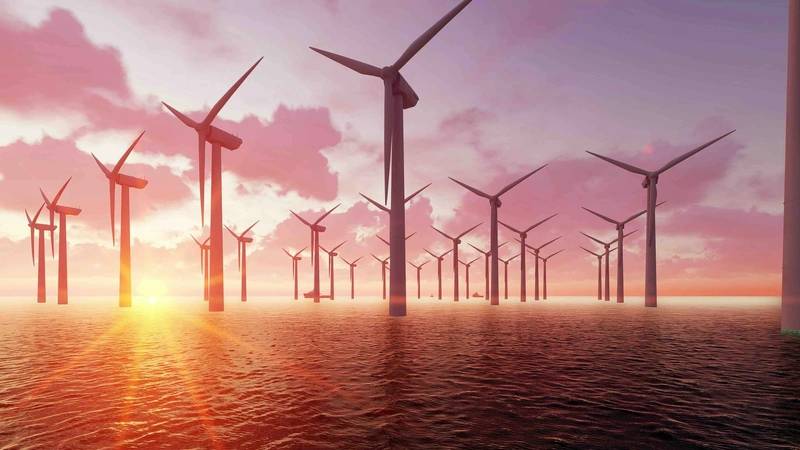
Copenhagen Infrastructure Partners, a Danish firm eager to invest in Italian offshore wind farms, is getting impatient.
Two years after the country's 2024 law offered incentives to would-be developers to provide offshore wind capacity, the government has yet to announce a calendar for auctions it said it would hold by 2028.
The inertia reflects a reluctance to embrace the transition from fossil fuels as a complex and polarised international debate pits clean energy campaigners against some governments and companies. U.S. President Donald Trump has led the support for continued use of oil and gas.
For Italian families and firms, the pain is acute from a surge in fossil fuel prices since U.S.-Israeli airstrikes started the Iran war at the end of February.
They are particularly exposed because of the extent to which Italy relies on imported natural gas.
Michele Schiavone, Italian country manager for Copenhagen Infrastructure Partners' offshore delivery arm, said Rome's foot-dragging on offshore wind meant it could miss out on a sector fundamental to its future energy security.
"The (government's) silence is not just preventing us going forwards, it is taking us backwards," he said. "It's an own-goal that is too bad to be true."
ITALY'S GAS RELIANCE DRIVES UP ELECTRICITY COSTS
Gas, which is more expensive than renewables, accounts for almost half of Italy's electricity production, the highest proportion in the European Union, according to 2025 data by global energy think tanks Ember and the Energy Institute.
That compares with around a fifth in Spain, 17% in Germany and 3% in France's nuclear-dominated system.
As the bloc's largest importer of liquefied natural gas through the Gulf, where Iran's effective closure of the Strait of Hormuz has caused unprecedented energy supply disruption, Italy could have responded by accelerating the quest for renewable energy.
Instead it launched international searches for new gas suppliers, just as it did after Moscow's 2022 invasion of Ukraine.
"Our panic today over the energy impact of the wars in progress is partly because we haven't pursued the right policies and investments in the past," said Riccardo Barbieri, director general at Italy's Treasury.
The contribution of renewable sources - mainly solar, wind and hydroelectric - to Italian power output rose by just above two percentage points to 41% between 2020 and 2024, according to Eurostat data.
In the same period, renewables in power output rose by 17 points in Spain, 10 points in Germany and 6.5 points even in nuclear-driven France.
ITALY WAGES 'WAR ON RENEWABLES'
Economists attribute Rome's underperformance to bureaucracy, resistance from regional governments, the interests of powerful energy groups, and an aversion to the green transition from right-wing Prime Minister Giorgia Meloni.
"In recent years we have waged a war on renewables," said Enrico Giovannini, former infrastructure minister and head of ASviS, a Rome-based sustainable development think tank.
"Politicians and business leaders said we had to slow down the push for renewables, but now in the current crisis they complain that our energy costs have jumped, and that is because we rely too much on fossil fuels."
Energy Minister Gilberto Pichetto Fratin told Reuters local resistance was the biggest issue.
"The problem is above all a NIMBY (not in my back yard) opposition at the local level," he said, adding that clashes over authorisation procedures between his own Environment ministry and the Culture ministry were also a factor.
Meloni, who took office in 2022, has dismissed the ecological transition as the "ideological transition" and said it is not driven by science.
Under her government, the proportion of EU post-COVID-19 funds that Italy dedicates to greening the economy has declined from an original 39.5% to 37.1%, barely above the EU-imposed minimum threshold of 37%.
Meloni has also proposed to reimburse gas-fired power plants their costs under the EU's Emission Trading Scheme, which makes emitters pay for the amount of carbon they produce. Environmental campaigners have said she is incentivising continued reliance on the fossil fuel.
Parliament this year passed legislation to delay by 13 years to 2038 the permanent closure of Italy's coal-fired plants, which are currently on stand-by.
MELONI SEEKS EU BUDGET LEEWAY TO FACE ENERGY CRISIS
The government says Italy's medium-term energy problems can be tackled by relaunching nuclear power, which Italians have rejected twice via referendum in the last 40 years.
Nuclear power over its life-cycle is not carbon free but its generation is emissions free. Many economists, however, say for Italy the timescale is too long and the cost too high for it to be a solution.
"I suspect all this talk about nuclear reactors may be a weapon of mass distraction to avoid discussing renewable energy," said Giovannini.
Among Italy's state-controlled energy companies, Eni has launched several low carbon units but its main business remains centred on oil and gas.
Utility Enel shifted away from renewable energy development to concentrate on low-risk regulated businesses during the first term of Meloni-appointed CEO Flavio Cattaneo, who took charge three years ago.
A spokesperson for Enel said the group had not shifted away from renewable energy, pointing to an increase in renewable capacity of 15% between 2023 and 2025. Excluding battery storage the increase was just 3%.
Meloni, reeling from political setbacks and facing a near-stagnant economy, has lobbied the EU to grant budget leeway to allow Italy to help firms and families with their energy bills, so far without success.
Meanwhile, Copenhagen Infrastructure Partners awaits the offshore wind auctions to launch an energy source in Italy that Schiavone said could produce twice as much electricity as solar per installed gigawatt, and 1.5 times as much as onshore wind.
"We need the government and the government needs us," he said.
Electricity https://tmsnrt.rs/4nHijJJ
(Reuters)