Explainer: Status of Foreign Oil Companies in Venezuela After Maduro’s Arrest
January 5, 2026
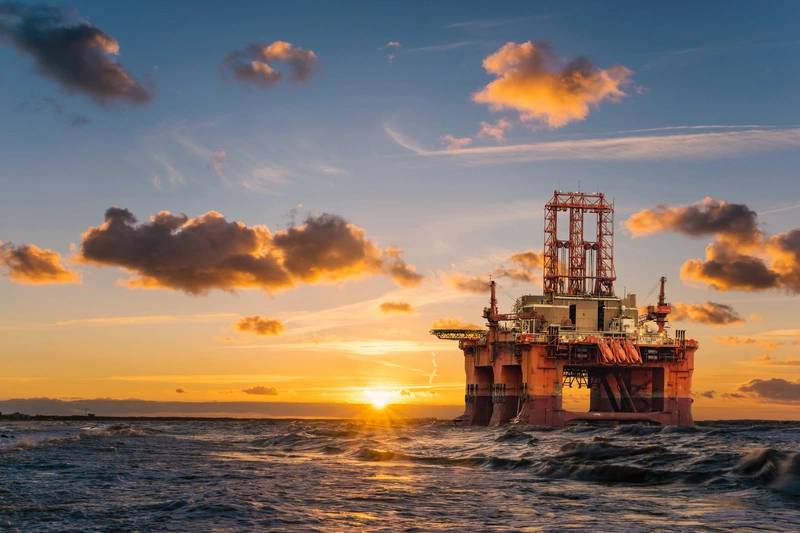
Here are some key facts about the international oil companies operating in Venezuela. The country, which has the largest oil reserves in the world, is now in crisis following the capture of the President Nicolas Maduro.
Hugo Chavez, the former president, expropriated foreign oil companies' assets in the 2000s. This strengthened the state-owned PDVSA?control over Venezuela's oilfields. Due to Washington's sanction, foreign companies must now obtain authorizations from the United States to negotiate, plan and operate projects within Venezuela. ?Oil exports from the OPEC nation are at a standstill.
Venezuela has granted BP and Trinidad and Tobago’s National Gas Company an exploration and production license for the Venezuelan portion of the cross-border Manakin Cocuina field that is yet to be produced. In April, the U.S. revoked the licenses it had previously granted to the two companies. This halted the planning of the project.
BP has not responded to a comment request on the current situation.
As part of Chavez’s forced migration to joint-ventures dominated by the state oil company PDVSA (formerly Venezuelan Oil Company), Chevron has negotiated to remain in the country and to form partnerships with PDVSA.
The company has stakes of 25-60% in five projects onshore and offshore in Venezuela.
According to data from ship monitoring, Chevron shipped around 150,000 barrels of crude oil per day (bpd) out of Venezuela to the U.S. Gulf Coast last month and about 100,000 bpd in November.
The company claims to be in full compliance with all applicable laws and regulations.
CHINESE COMPANIES
China has been a major buyer of oil and an investor in Venezuela's Energy Sector. Sinopec and China National Petroleum Corp, both state-owned companies, have joint ventures with Venezuela. The companies did not respond immediately to questions about their involvement in Venezuela. China Concord Resources Corp, a private company, planned to invest $1 billion last year in two oilfields that would produce 60,000 barrels per day by 2026. Reports indicate that the company was unable to be reached for comment.
CONOCOPHILLIPS
Conoco has been trying to recover $12 billion in assets that were expropriated during the Chavez years.
ConocoPhillips monitors developments in Venezuela, and their possible implications for the global energy supply. A spokesperson stated that it would be premature to speculate about any future business activities or investment.
Eni, an Italian company, produces gas at the Perla offshore oil and gas field. This is a joint venture between Repsol and Cardon IV. Venezuela uses the gas produced for its electricity production.
Eni stated that Venezuela owed them $2.3 billion by June 2025. This is more than 2024 due to the decision made in March 2025 by the U.S. Administration to revoke licenses for recovering money owed through PDVSA crude cargoes.
Eni's spokesperson stated that the company is "closely monitoring the development of the situation". At this time, the operations are continuing as normal.
EXXONMOBIL
ExxonMobil has no presence in Venezuela after it refused to move projects into joint ventures with PDVSA.
Exxon claimed that Venezuela owed them $984.5m in compensation after a long international arbitration case. These cases date back to 2007, when Exxon’s oil projects Cerro Negro y La Ceiba, were expropriated.
In September 2025, a U.S. Court recognized Venezuela's obligation to pay the amount.
Exxon didn't immediately respond to an inquiry for comment.
REPSOL
Repsol, a Spanish energy company, has stakes in several oil and gas fields, both onshore and off shore, in Venezuela. These include Petroquiriquire, Cardon IV West and Petroquiriquire West, which is run by Eni. The U.S. informed Repsol in March 2025 that a license they had granted to the company for operations in Venezuela was revoked. In a previous permit issued by the U.S., Repsol agreed to receive oil as a debt repayment from PDVSA.
Repsol claims Venezuela owes them 586 million Euros ($683.63 millions). On Monday, a spokesperson declined to comment.
SHELL Shell is set to operate the yet to produce Dragon gas field on Venezuelan waters with Trinidad and Tobago’s National Gas Company. The output will be sent to Trinidad for conversion into liquefied gas.
The project is still largely frozen. Shell and BP own the Atlantic LNG facility in Trinidad, which requires increased gas supplies.
Venezuela suspended all energy deals with Trinidad after Venezuelan authorities authorized Shell to restart Dragon planning in October.
Shell has declined to comment Monday.
ROSNEFT
According to Russian media, Rosneft, the Russian state oil company, has guaranteed billions of dollars in loans for Venezuela, backed by oil sales. It also owns stakes Petromonagas and Petroperija as well as Boqueron and Petromiranda. The estimated value of these ventures is around $5 billion.
(Source: Reuters)