Markets: Oil Majors Reload Exploration Hoppers Across Sub-Saharan Africa
by David Thomson and Jamie McGreevy, Welligence Energy Analytics
June 25, 2026
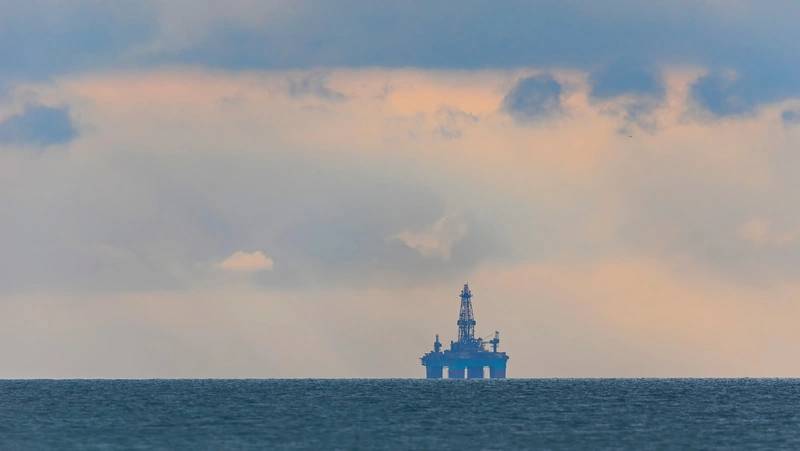
Faced with declining production post-2030, across Sub-Saharan Africa (SSA), the Majors have started the process of reloading exploration hoppers. Targeting predominantly deep and ultra-deep waters, they have signed numerous agreements aimed at unlocking acreage and discovering the next Namibia or Guyana. But while there have been agreements for acreage that were offered as part of traditional licensing rounds – such as the award to TotalEnergies of PPLs 2000 and 2001 in Nigeria in September 2025 – there has been an increasing trend to sign Memorandums of Understanding (MoU), Agreements in Principle (AiP) or Reconnaissance Licences (RL) for exploration acreage.
In total and including agreements signed by Petrobras and Woodside Energy, over 360,000 km2, an area ~1.6 times the size of the Permian Basin, is covered by these various agreements.
Shell has been the most active, securing early-stage agreements in Angola, Ghana and Sierra Leone, while Equinor, Sonangol, Chevron, ExxonMobil, Petrobras and Woodside have also agreed terms across Angolan acreage. Further north, bp and ExxonMobil are advancing towards formal PSCs in Gabon; Eni, Chevron and Galp have entered Equatorial Guinea; and 1Petrobras held exclusive negotiating rights over a large swathe of Côte d'Ivoire blocks. In non-producing countries, Eni has been particularly active having signed reconnaissance agreements in Sierra Leone, Liberia and Guinea (it also signed a formal PSC for a block in Gambia in early June).
1 as at end May 2026, in early June, Petrobras signed PSCs for eight out of nine blocks offshore Cote d’Ivoire it had formally declared an interest in in 2025
 © Welligence Energy Analytics
Low-Cost Access to High-Risk Acreage
There are clear benefits for both host countries and operators to sign MoUs/AiPs/RLs.
Primarily, they provide a cost-effective solution to help de-risking exploration acreage. Typically, there will be low commitments for the operators, and they can undertake desk-based studies. The focus will be on analysing existing geological and geophysical data, including 2D and 3D seismic, well reports, and other relevant technical information. In so doing, acreage is de-risked, geological understanding is improved, and the journey towards bankable projects begins. Some RLs may involve work commitments such as new data acquisition, but even here, these commitments are low cost.
Given that ~83% of the acreage has been traditionally considered ultra-deep water (>1,500m*), where drilling is very high cost, this low-cost early-stage opportunity screening is further evidence of the need for companies to maintain rigid fiscal discipline. Once studies are completed, the company is in a good position to return to the regulator and ask for a more formal deal for the acreage it considers the most prospective. Indeed, some of the MoUs and Agreement in Principles (AiPs) that have been signed, specifically involve discussions regarding future fiscal terms on the acreage.
*The definition of ultra-deep water continues to evolve. Historically, anything >1,500m has been considered ultra-deep but with technological improvements to the fore, many operators now consider ultra-deep to start at 3,000m, with the nuance now less to do with absolute water depth and more to do with whether a company can drill and develop.

Acreage by Water Depth: The Ultra-Deepwater Dominance
The trend is also part of an increasing desire for both host countries and companies to conduct direct negotiations rather than hold or enter formal licensing rounds. There are various advantages to this model. These include quicker and more focused negotiation, less concern with rival bids, and mitigating the risk of awarding acreage to less capable companies.
While the current wave of pre-licence activity across SSA is undoubtedly a positive signal for the continent's exploration potential, investors and host governments should be clear-eyed about what these instruments represent: they are options, not commitments. The real test will come over the next three to five years, as these agreements either convert into binding contracts with firm and tangible obligations such as seismic acquisition or drilling, or quietly expire, as the majority historically have. From our analysis, it is highly unlikely anything more than 25% of the acreage that is covered by these agreements will end up being formal fiscal agreements. Indeed historically, no MoUs in the region have resulted in formal contracts. But given the fact many of the recent deals have been in countries with proven producing potential, and even non-producing countries such as Liberia, Sierra Leone and Guinea are being re-evaluated as potential analogues to Guyana and Suriname, we are confident a sizeable amount of acreage will ultimately be converted to formal terms with drilling commitments.
While Sub-Saharan Africa has been front and centre of MoUs and AiPs, other regions have also signed similar deals with Majors in the past few years. In the Middle East North Africa (MENA) region, Egypt, Kuwait, Libya, Syria and Turkey have all inked deals with Majors this year for exploration opportunities while Azerbaijan, Kazakhstan and Uzbekistan have led the way in the Caspian. In March 2024, Malaysia signed Technical Evaluation Agreements (like Reconnaissance Licences) with companies including bp, Eni and TotalEnergies. Other regions have continued to favour more formal competitive bid processes.
About the Authors:
- David Thomson is Vice President Sub-Saharan Africa at Welligence Energy Analytics and has over 25 years of experience, specializing in upstream oil and gas research across the region. He has also held roles covering Global Exploration and Latin America upstream. Prior to Welligence, he held senior research roles at Wood Mackenzie.
- Jamie McGreevy is a Senior Analyst for Sub-Saharan Africa at Welligence Energy Analytics and has over 14 years of experience in the upstream sector. Prior to this role, he spent seven years as a Senior Geoscientist at Azimuth Group, a privately backed exploration company with a portfolio of offshore exploration assets primarily focused on the Atlantic Margin.