Nuclear-Powered DP Vessels Technically Feasible, Vard Study Shows
January 26, 2026
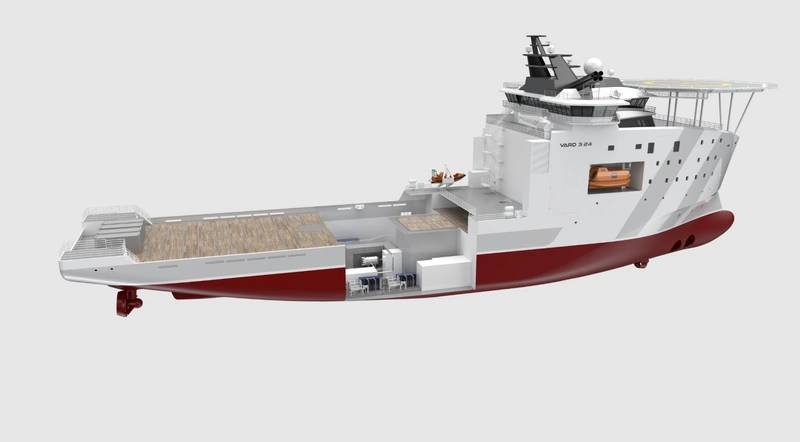
A study led by Vard, a subsidiary of Italy’s Fincantieri, has found that nuclear-powered offshore vessels are technically feasible, confirming that small fourth-generation nuclear reactors can be integrated into dynamically positioned vessels while meeting safety, redundancy and operational requirements.
Results from the NuProShip II research and innovation project show that nuclear propulsion can support DP2 power architectures, with potential adaptability to DP3 standards, offering high operational reliability alongside the possibility of zero greenhouse gas emissions and extended operating endurance.
As part of the project, Vard completed a concept design for a nuclear-powered offshore construction vessel based on an existing VARD reference design. The study evaluated the integration of a helium gas-cooled nuclear reactor as the primary power source and assessed impacts on vessel layout, safety systems and overall performance.
The project also examined alternative energy balancing solutions, including super-critical CO₂ turbines and thermal battery systems, which could complement nuclear propulsion and reduce reliance on conventional electrical batteries.
Short for ‘Nuclear Propulsion in merchant Shipping’, the NuProShip II study was led by Vard Design and conducted in cooperation with classification society DNV, Emerald Nuclear, Vard Electro, offshore vessel owner Island Offshore, and the Norwegian University of Science and Technology (NTNU), which served as project leader.
“We are proud to contribute to the future of maritime innovation. NuProShip II demonstrates that nuclear-powered vessels are not just a vision, but a technically feasible solution. Our work lays the foundation for safer, more efficient, and environmentally responsible shipping.
“We hope this project brings real value to the continued development of maritime nuclear technology. It is also particularly valuable to have a professional ship owner and operator like Island Offshore in the project, proving that ship owners are focusing on this technology going forward,” said Henrik Burvang, Research & Innovation Manager at Vard Design.
The study also highlighted the need for updated regulatory frameworks, greater industrial experience in civilian nuclear marine propulsion, and sustained efforts to address public acceptance and environmental stewardship.
NuProShip II is funded by the Research Council of Norway and will conclude in 2026. It will be followed by the SFI SAINT research Centre, led by NTNU, which will focus on applied and industrialized nuclear technology for maritime use.