Port of the Future 2026: A Look Back, a Path Forward
Greg Trauthwein
March 4, 2026
A Quick Q&A with Port of the Future Founder and Event Director Kevin Clement on key differentiators and the value of attending, exhibiting and speaking at Port of the Future 2026:
- CLICK HERE to discover the conference line-up and to register for Port of the Future 2026 in Houston, March 23-25.
Q: What inspired the creation of the Port of the Future Conference?
The idea started in 2019 with Dr. Tony Ambler at the University of Houston. The vision was to create an annual event focused on the future of ports—one that would connect the maritime industry with universities, promote new research, and encourage innovative thinking around port technology and operations.
Q: What makes the Port of the Future Conference different from other maritime events?
From day one, the focus has been on forward-looking technologies—AI, automation, digitalization, robotics, and simulation—and how they can help close the operational efficiency gap between many U.S. ports and the world’s most advanced facilities.
Q: Sustainability is a major industry focus today. How does the event address that?
Decarbonization has been a core theme since the beginning. Tracks like Decarbonization and Alternate Fuels and Port Energy and Sustainability are staples of the program, highlighting the efforts of ports and shipping companies working to reduce their carbon footprint.
Q: Is the conference primarily focused on the U.S. market?
Not at all. The event has always had a global perspective. We regularly feature port projects, technology initiatives, and policy insights from across the Americas, Europe, Africa, and Asia.
Q: What can attendees expect from the program format?
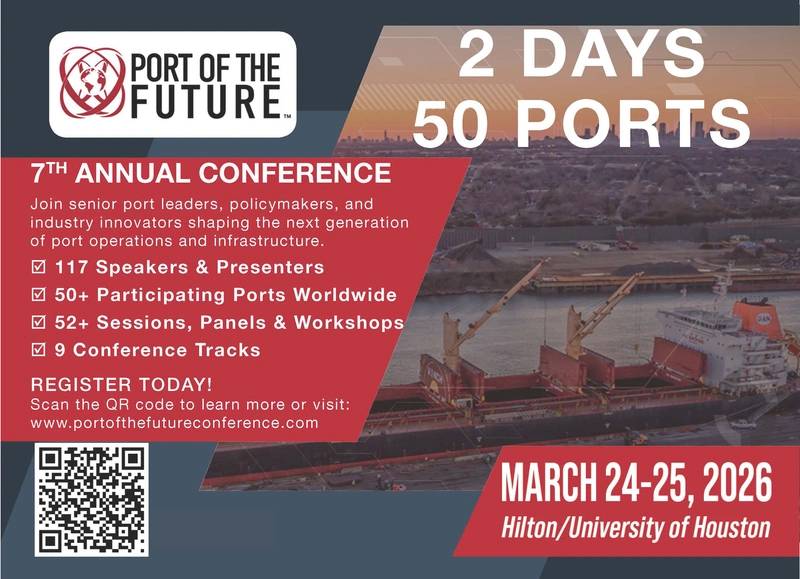
Clement: It’s designed to be highly practical and engaging. We run nine conference tracks covering the industry’s biggest challenges and opportunities, with keynotes, case studies, panels, interviews, and live technology demonstrations.
Q: The event is known for its speakers. Who has participated in the past?
We’ve had an incredible lineup over the years—people like former U.S. Coast Guard Commandant Admiral James Loy, former CBP Commissioner Alan Bersin, Suez Canal Economic Zone Chairman Waleid Gamal El Din, maritime economist John D. McKown, and senior leaders from ports, government, and industry worldwide.
Q: You made a notable change to the speaker model. Why?
After three years we eliminated the “pay-to-speak” model. That opened the door for start-ups, think tanks, and research labs—groups that often drive the most innovative ideas. Today speakers can participate at no cost.
Q: How do you ensure strong port participation?
We offer complimentary representation for one delegate from each port. The goal was to bring together at least 50 port leaders in one place—and it worked. Over the past four years, we’ve hosted more than 60 port representatives from around the world.
Q: What’s next for the Port of the Future Conference?
In 2025 the conference transitioned from the University of Houston to New Wave Media. The mission remains the same: bring together innovators, operators, researchers, and policymakers to shape the future of global ports.