The Gulf of America Remains the World's Offshore Innovation Laboratory
Erik Milito
August 17, 2026
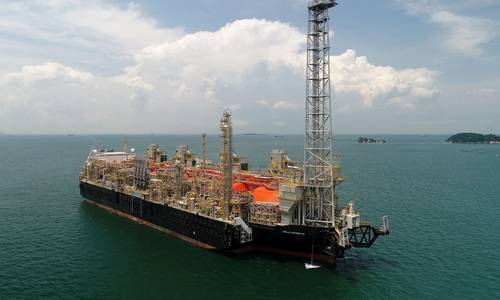
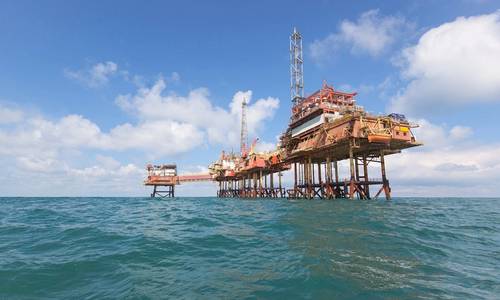
For generations, the Gulf of America has served as the proving ground for offshore innovation. Every major chapter in modern offshore energy has depended upon American engineers, geoscientists, mariners, fabricators, regulators, and offshore workers to solve problems many believed were beyond reach.
From the earliest fixed platforms to deepwater production, subsea systems, floating facilities, and today's 20,000 psi reservoirs, the Gulf of America has consistently demonstrated that producing more American energy safely requires constant technological advancement.
The foundation built through decades of offshore energy innovation will support not only the next generation of oil and gas production, but the next generation of offshore industries.
Over the past decade, the offshore energy industry quietly achieved one of its most remarkable engineering milestones: safely unlocking oil and natural gas from reservoirs approaching 20,000 pounds per square inch (20k). Fields once considered commercially unattainable are now producing tremendous volumes of U.S. oil supplies, with additional projects advancing toward first production. The ingenuity of our industry consistently continues to impress and build upon the most recent generation of technology to keep the energy flowing. The same is true for 20k systems as the industry has engineered a new generation and class of offshore technologies.
New generations of drillships, well control equipment, subsea trees, manifolds, completion systems, digital monitoring technologies, and containment capabilities all had to be designed, tested, certified, and deployed before the first barrel could be produced. Operators, contractors, manufacturers, and regulators spent years working through new challenges that had not yet been solved at a commercial scale.
Each new frontier requires advances in engineering, safety systems, and operational expertise. In meeting those challenges, the industry has expanded both America's energy production and the capabilities of the offshore sector itself.
Innovation is how offshore energy advances. That is why the Gulf of America remains far more than one of the world's most productive offshore basins. It remains one of the world's premier offshore innovation laboratories.
Beyond Traditional Offshore Energy
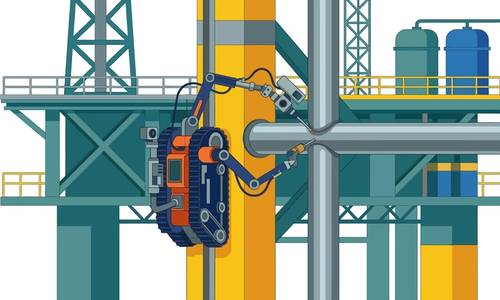
Importantly, the capabilities developed there rarely remain confined to a single project or even a single industry. They compound over time. The same expertise in offshore geoscience, subsea engineering, marine operations, remote inspection, digital monitoring, and environmental management that supports oil and natural gas production increasingly provides the foundation for entirely new offshore opportunities.
Carbon capture and storage is an obvious example. Offshore operators are applying decades of experience managing complex reservoirs, drilling wells, monitoring subsurface formations, and safely operating in challenging marine environments to permanent carbon storage projects.
Now, federal policymakers are beginning to recognize just how broad that offshore innovation ecosystem has become.
This summer, the Bureau of Ocean Energy Management (BOEM) initiated the first step toward evaluating offshore critical mineral resources off Virginia, recognizing the potential for America's offshore expertise to support a new strategic industry.
BOEM also announced it is evaluating the Outer Continental Shelf as a potential location for offshore space launch and recovery infrastructure, exploring whether the same offshore engineering capabilities that have supported energy development for decades could help expand America's commercial space capacity and strengthen national security.
Meanwhile, the Marine Minerals Administration and the Nuclear Regulatory Commission recently signed a memorandum of understanding establishing a framework for coordinating potential future offshore nuclear energy projects, another indication that policymakers increasingly view the Outer Continental Shelf as a platform for multiple strategic industries.
Whether or not those efforts ultimately lead to commercial development, they reflect something larger: policymakers increasingly recognize that America's offshore engineering capabilities extend well beyond traditional oil and natural gas production.
An Offshore Industrial Ecosystem Built Over Decades
The vessels, ports, fabrication yards, engineering firms, subsea contractors, environmental specialists, and highly skilled workforce that support today's offshore energy industry represent decades of accumulated expertise. They are not easily replicated, nor were they built overnight. They constitute an industrial ecosystem that has continually adapted to new technical challenges while maintaining some of the highest safety and environmental standards anywhere in the world.
Importantly, none of this diminishes the central role of offshore oil and natural gas - quite the opposite. Oil and natural gas remain the foundation of America's offshore economy and will continue to supply reliable, affordable energy for decades to come. The technologies being developed today are helping unlock resources that strengthen U.S. energy security while supporting jobs, investment, and manufacturing across the country.
But history suggests something equally important. The technologies developed to solve one offshore challenge rarely remain confined to that challenge alone. Advances in drilling, subsea engineering, marine operations, digital monitoring, environmental science, and reservoir management continue to strengthen offshore oil and natural gas while creating capabilities that can be applied to emerging opportunities: from carbon capture and storage and offshore critical minerals to autonomous systems, commercial space infrastructure, offshore wind, and other industries still taking shape. The offshore sector has long shared expertise with industries ranging from aerospace to defense, and that exchange continues as engineering challenges grow more complex.
The Gulf of America has never simply been a place where America produces offshore energy. It has been the place where America learns how to produce offshore energy better: more safely, more efficiently, and in environments once thought impossible – for the benefit of American consumers and economies throughout the world. As new offshore industries emerge alongside traditional energy development, that culture of innovation may prove to be one of the Gulf's greatest long-term contributions.
The next breakthrough may look different than the last one. But if history is any guide, there's a good chance it will begin in the Gulf of America.