UK's Wind Output Surge Softens Blow from Global Energy Disruption
Gavin Maguire
March 31, 2026
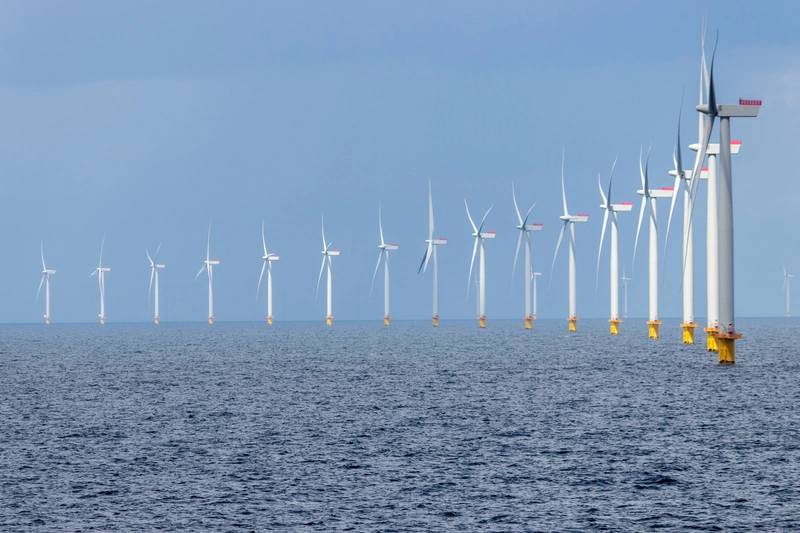
Record output from wind farms has helped boost total clean power supplies in the United Kingdom to new highs so far in 2026, and allowed power firms to pare use of fossil fuels to multi-year lows.
The growth in wind output has helped shield the UK power system from the worst effects of the U.S. and Israel war against Iran, which has disrupted supplies of fossil fuels from the Middle East and sent oil and natural gas costs soaring.
Power supplies from UK wind farms during the opening three months of 2026 increased by 31% from the same months in 2025, data from LSEG shows, helping to lift overall clean power output by 16% from a year ago and total power output by 4%.
Higher clean and total power output has in turn allowed utilities to curb use of fossil fuels, especially within the past month when regional gas prices surged following the outbreak of the Iran conflict.
With several other European nations reeling from the fresh surge in oil and gas costs, the UK's wind-heavy power system may act as a blueprint for other countries also seeking to reduce fossil fuel exposure.
Wind's Momentum
UK output from metered wind farms - which feed straight into power grids - surged by 33% during January to March compared to the same months in 2025, to around 33,000 megawatts (MW) per 30 minutes, according to data compiled by LSEG.
Output from smaller embedded wind farms - which connect to local distribution networks - is up around 27% from 2025 to around 7,800 MW per 30 minutes.
For both wind farm categories, output during the January to March window was the highest since at least 2023, and has helped establish wind power as the UK's single largest power source.
Total wind output accounted for around 42% of total UK power supplies during January to March, compared to a 33% share from wind farms during the same months in 2025.
Fossil Fuel Curbs
Record output from UK biomass plants - which burn wood pellets and municipal waste - also helped lift total UK clean power so far this year, and helped offset contractions from nuclear, solar and hydro plants, LSEG data shows.
Higher overall clean power supplies also enabled UK power firms to ration use of gas plants, which posted a 16% drop in output during January to March compared to the year before.
The year-over-year fall in gas-fired production was even steeper during the month of March, when total gas-fired production dropped by 26% from March 2025.
As March was when global gas markets reacted most severely to the outbreak of the U.S-Iran war and closure of the Strait of Hormuz, this cut to UK gas use by power firms potentially helped UK utilities avert major cost surges.
Since the end of February - just before the Iran bombing began - UK benchmark natural gas prices TRGBNBPD1 have surged by around 74%, which exceeds the 67% increase in mainland Europe gas prices TRNLTTFMc1 over that period.
Some major industrial gas consumers in the UK may have had no choice but to pay up for gas in recent weeks, and have thereby kept overall gas supplies tight across the country.
But thanks to sharply higher wind generation, power producers have been able to limit their exposure to the gas market so far in 2026, which may in turn limit any further upward pressure on UK consumer power bills.
Price Watch
Wholesale power prices will ultimately reflect just how well UK power firms have navigated the Iran crisis so far.
Over the first three months of 2026, spot wholesale base power prices in the UK have averaged around 89 euros per megawatt hour, according to LSEG.
That compares to an average of around 101 euros in Germany, 137 euros in Italy, and around 70 euros in France.
The UK's power price discount to Germany - Europe's largest economy and manufacturer - is a relatively new phenomenon, as UK power costs had consistently traded above Germany's until Russia's invasion of Ukraine in 2022 sent regional gas prices soaring.
Since then the UK's power firms have aggressively ramped up renewables capacity in a bid to reduce the country's reliance on imported fossil fuels for power.
Record production from UK wind farms this year suggests that substantial progress has been made in that arena, and the UK now routinely secures more electricity from clean power sources than Germany, according to Ember.
But with the conflict in Iran still raging, the UK power system is not out of the woods, and may yet feel greater impact from the Iran war fallout once wind production dies down over the summer months.
For the time being, however, the UK's wind farms have shown the benefits of hefty home-grown generation, and may spur other regional economies to also expand their local wind power footprints.
The opinions expressed here are those of the author, a columnist for Reuters.
(Reuters - Reporting by Gavin Maguire; Editing by Lincoln Feast.)