Global OTEC's Floating Prototype Withstands 19 Storms in Offshore Trial
November 2, 2026
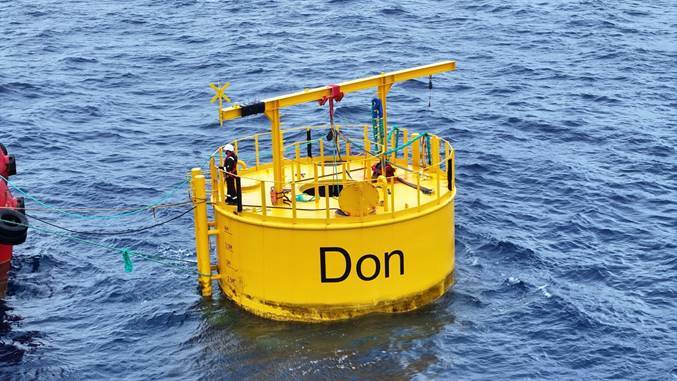
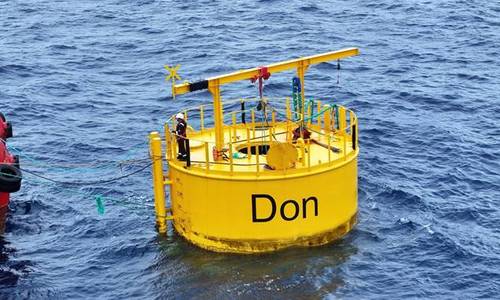
Ocean energy company Global OTEC has completed a year of continuous offshore testing of its floating Ocean Thermal Energy Conversion (OTEC) structural prototype off Gran Canaria, with the platform successfully withstanding 19 named storms during the trial.
The company said the prototype completed 8,760 hours of testing at sea and has now been decommissioned, marking the conclusion of the offshore testing phase of the PLOTEC project.
Installed in October 2025 at the PLOCAN marine technology test site off Gran Canaria, the prototype was developed under the PLOTEC project, which received $3.9 million (€3.5 million) in funding from Horizon Europe in 2022.
The testing period covered the 2025-2026 storm season, during which 19 named storms were recorded, the highest number since the current storm-naming system began in 2017, according to Spain's national weather agency AEMET.
Onboard sensors recorded a maximum wave height of five meters, which Global OTEC said would be equivalent to a 30-metre wave height for a full-scale system.
The trials were designed to demonstrate the ability of a floating OTEC platform and its vertical seawater intake riser to withstand open-ocean conditions, addressing a key engineering challenge for commercial-scale deployment.
"This project really helped advance our riser installation methodology and solidified the path forward for future OTEC deployments in storm-prone environments. We couldn't have asked for more challenging conditions for testing," said Sam Johnston, Lead Engineer responsible for the prototype's development and offshore testing.
OTEC technology generates continuous renewable electricity by using the temperature difference between warm surface water and cold deep ocean water.
While small-scale systems have previously been demonstrated onshore, the size and length of seawater intake pipelines have constrained their capacity.
According to Global OTEC, moving the technology offshore can reduce the required pipe length by 80%, potentially enabling larger installations for island communities.
The company has identified more than 25 GW of existing fossil fuel generation capacity across tropical islands that could potentially be replaced by OTEC systems over time.